
Buyer’s guide

Best Vinyl Record Player: Top Picks for Every Setup

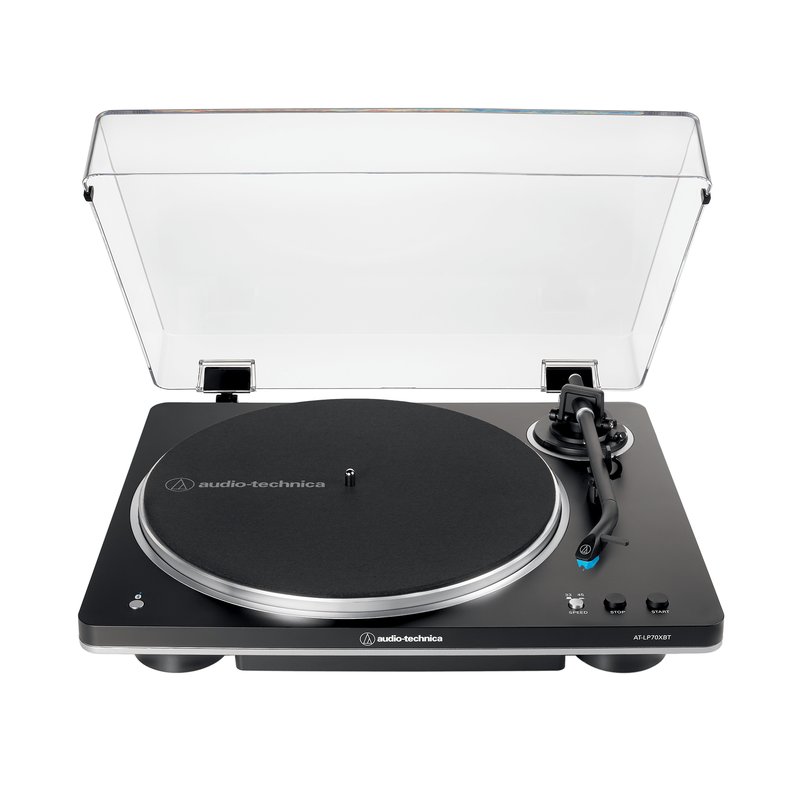
For most people, the best vinyl record player is an automatic turntable with a switchable built-in preamp, paired with powered speakers. Our best overall pick is the Audio-Technica AT-LP70XBT; if you want everything in one box, the Victrola Eastwood II has speakers built in.

Audio-Technica AT-LP70XBT record player
Our #1 pick

Audio-Technica AT-LP70XBT

Mid-range price range

Drive & speedsBelt, fully automatic · 33/45
Preamp / outputsBuilt-in, switchable phono/line
BluetoothOut · aptX Adaptive, aptX, SBC

See ratings & reviews ↗ · All 7 picks

Top picks at a glance

The best vinyl record players, by how you listen

Seven players that cover how most people actually play records: through powered speakers, built-in speakers, Bluetooth, on the move or on Sonos. Each card says who should skip it.

Best overall#1
Audio-Technica AT-LP70XBT record player

Audio-Technica AT-LP70XBT

Mid-range price range

One-button automatic play, a switchable preamp, aptX Adaptive Bluetooth and an Audio-Technica VM95 cartridge you can upgrade later.

See finishes ›
Best for beginners#2
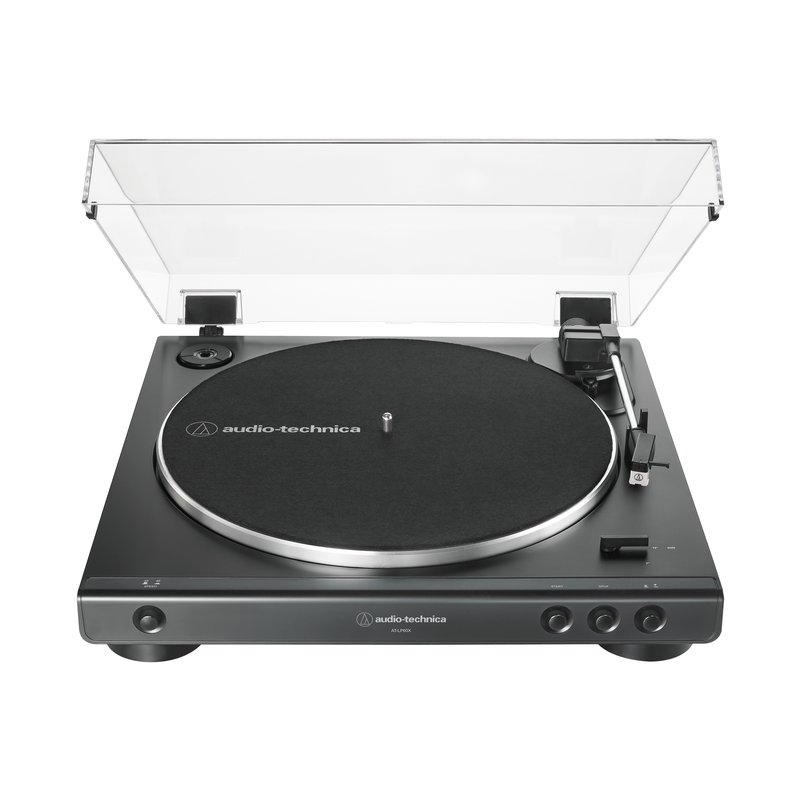
Audio-Technica AT-LP60X record player

Audio-Technica AT-LP60X

Mid-range price range

The simplest wired setup: fully automatic, built-in preamp, and it plugs straight into powered speakers.

See finishes ›
Best with built-in speakers#3
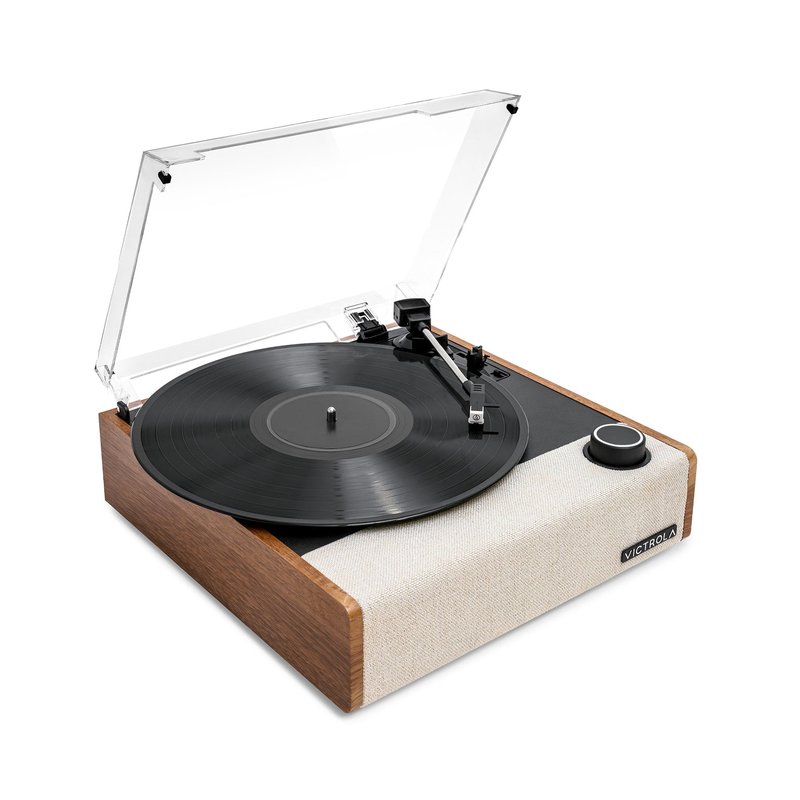
Victrola Eastwood II record player

Victrola Eastwood II

Mid-range price range

A compact all-in-one with an Audio-Technica cartridge and Bluetooth that works both ways.

See finishes ›
Best budget#4
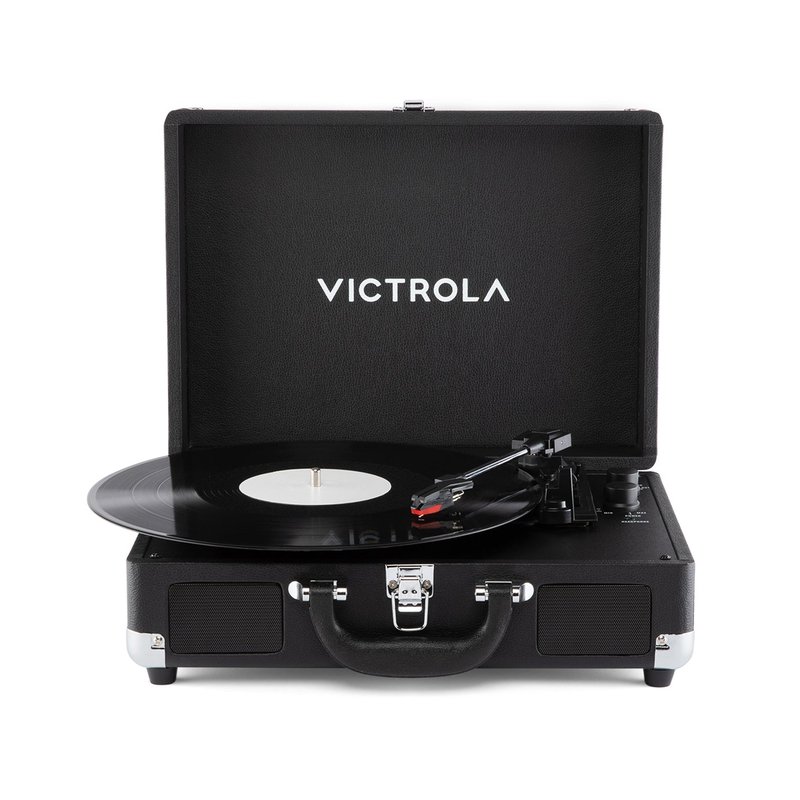
Victrola Journey II record player

Victrola Journey II

Budget price range

The lowest-cost name-brand suitcase player, with speakers, two-way Bluetooth and RCA out. Fine for casual listening.

See finishes ›
Best portable#5
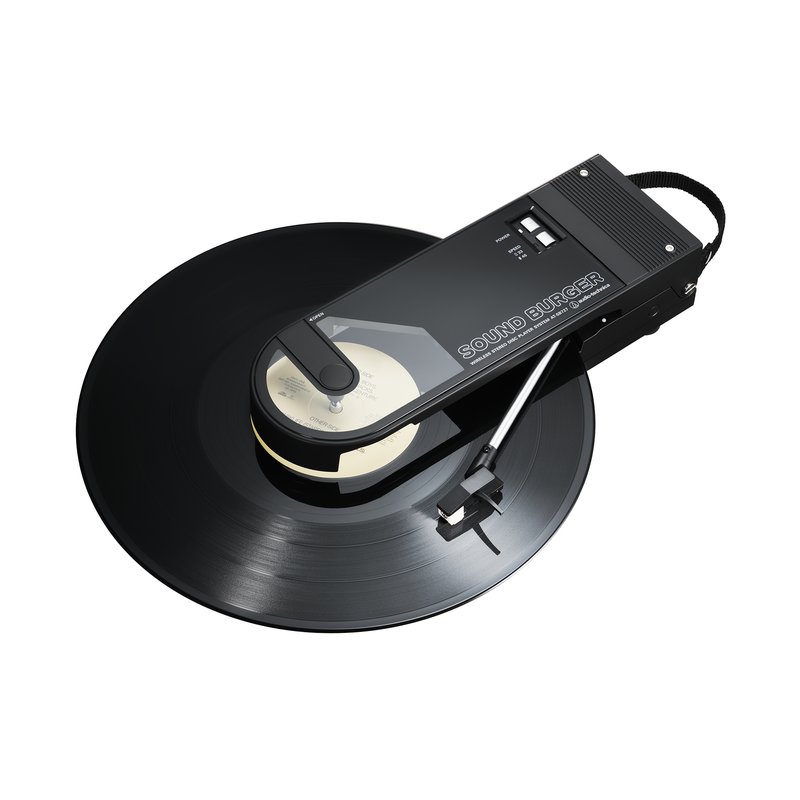
Audio-Technica Sound Burger (AT-SB727) record player

Audio-Technica Sound Burger (AT-SB727)

Mid-range price range

A battery-powered turntable about the size of a book, with Bluetooth out and about 12 hours per charge.

See finishes ›
Best for sound quality#6
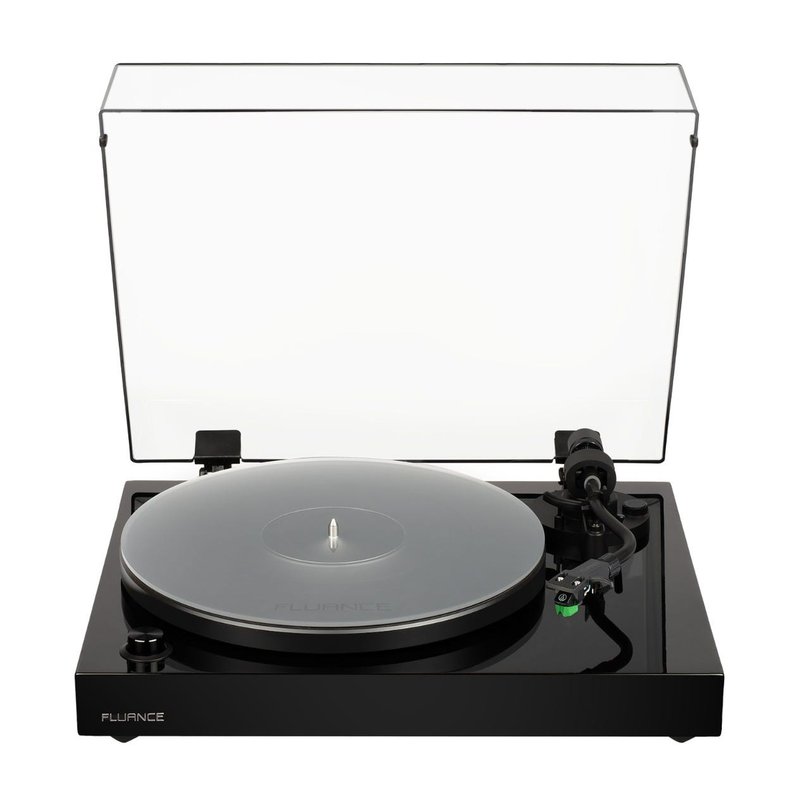
Fluance RT81+ record player

Fluance RT81+

Premium price range

A manual deck with an AT-VM95E elliptical cartridge, adjustable counterweight and anti-skate, and a switchable preamp.

See finishes ›
Best for Sonos#7
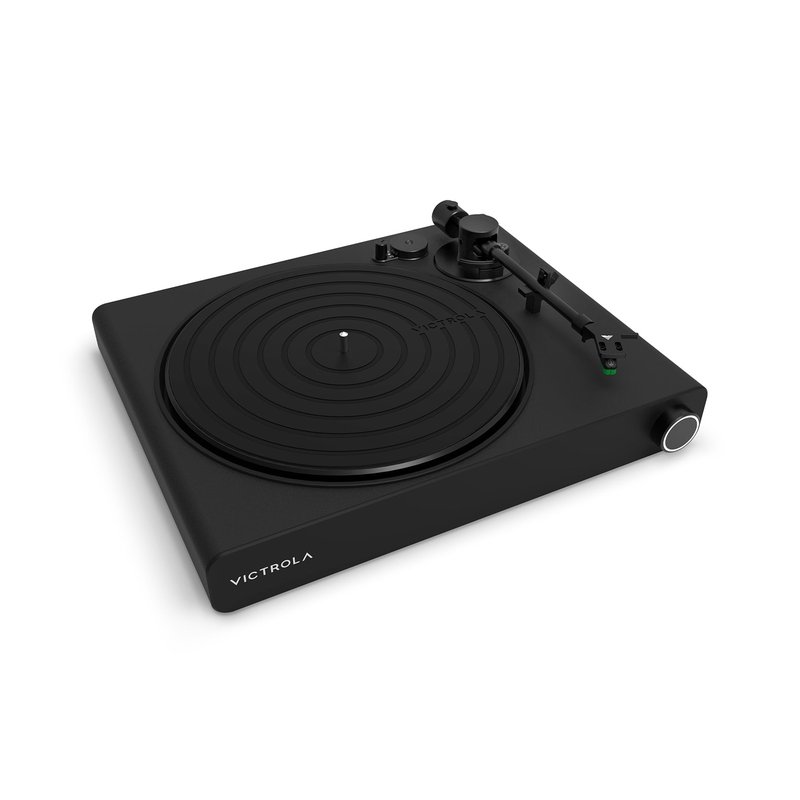
Victrola Stream Onyx record player

Victrola Stream Onyx

Premium price range

Marketed as Works with Sonos: it streams records to your Sonos system over Wi-Fi, no line-in needed.

See finishes ›

Prices change often, so we show a price range instead of a number. Budget is under $100, Mid-range $100–$250, Premium over $250, based on typical list prices.

Find your match

Start from your setup, not the brand

The right player depends on what it plugs into. Pick the line that sounds most like you.

Victrola Eastwood II record player

I want one box with speakers built in

Start with

Victrola Eastwood II

No extra speakers, no cables to buy. An all-in-one plays out of the box; the better ones add RCA out so you can upgrade later.

Audio-Technica AT-LP70XBT record player

I already have Bluetooth speakers or headphones

Start with

Audio-Technica AT-LP70XBT

A turntable with Bluetooth output sends records to them wirelessly. Look for a wired output too, so you are not locked in.

Audio-Technica AT-LP60X record player

This is my first turntable

Start with

Audio-Technica AT-LP60X

An automatic deck with a built-in preamp and a pair of powered speakers is the least fiddly way to start.

Victrola Journey II record player

I want to spend as little as possible

Start with

Victrola Journey II

Suitcase players cost the least. Know what you give up on stylus and speakers, and when it pays to stretch.

Audio-Technica Sound Burger (AT-SB727) record player

I want to take records with me

Start with

Audio-Technica Sound Burger (AT-SB727)

Battery power, a light build and Bluetooth out matter more than anything else here.

Victrola Stream Onyx record player

My home runs on Sonos

Start with

Victrola Stream Onyx

Either a turntable built to stream to Sonos, or one with a built-in preamp plugged into a Sonos line-in.

Our picks in detail

What each record player does well, and who should skip it

Specifications come from each brand; fit notes draw on manufacturer guidance and independent reviews. We have not tested or used these record players ourselves. How we pick.

Best overall#1

Audio-Technica AT-LP70XBT

For most people starting or restarting a vinyl habit, this is the one to buy. It is a one-button automatic turntable with a switchable built-in preamp, so it plugs into powered speakers or a receiver, and it can also stream to Bluetooth speakers or headphones. The part that sets it apart from cheaper automatics is the cartridge: Audio-Technica fits its AT-VM95C, which accepts the other VM95 replacement styli later.

Why it stands out

  • Fully automatic: press start and the arm lowers, plays and returns on its own.
  • Bluetooth 5.2 output with aptX Adaptive, aptX and SBC (Audio-Technica’s spec), plus wired RCA output with the preamp on or off.
  • AT-VM95C cartridge whose stylus can be swapped for other VM95-series styli, including elliptical and line-contact types.
Drive & speedsBelt, fully automatic · 33/45
Preamp / outputsBuilt-in, switchable phono/line
BluetoothOut · aptX Adaptive, aptX, SBC
SpeakersNone (add powered speakers)
CartridgeAT-VM95C; accepts other VM95 styli

Good fit if

  • You want plug-and-play playback with room to improve the sound later.
  • You will use powered speakers now and might add Bluetooth headphones or a speaker.
  • You do not want to learn counterweights and anti-skate on day one.

Skip it if

  • You want to fine-tune tracking force: TechRadar notes the counterweight is not adjustable.
  • You need 78 rpm or USB ripping; look at the AT-LP120XUSB.

There is no all-black version: Audio-Technica sells it in black/silver, black/bronze and white/silver. Our link goes to black/silver.

Best for beginners#2

Audio-Technica AT-LP60X

The AT-LP60X is the simplest proper turntable to live with: fully automatic, belt-driven, with a built-in preamp you can switch off. Pair it with powered speakers and you are playing records in a few minutes.

Why it stands out

  • Fully automatic start, stop and arm return.
  • Built-in phono preamp with a PHONO/LINE switch, so it works with powered speakers, a receiver’s phono input or a Sonos line-in.
  • Replacement stylus is the ATN3600L; Audio-Technica’s manual suggests replacing it after about 400 hours.
Drive & speedsBelt, fully automatic · 33/45
Preamp / outputsBuilt-in, switchable phono/line
BluetoothNo
SpeakersNone (add powered speakers)
CartridgeIntegral dual magnet; ATN3600L stylus

Good fit if

  • You want the easiest wired setup with powered speakers.
  • You are buying a first turntable and do not need Bluetooth.
  • You want a compact deck (about 14 by 15 inches).

Skip it if

  • You want a cartridge upgrade path: the cartridge is integral, so step up to the AT-LP70X or AT-LP70XBT.
  • You want to adjust tracking force or anti-skate; the automatic arm is fixed.
Best with built-in speakers#3

Victrola Eastwood II

The Eastwood II is a compact all-in-one record player with built-in speakers that is well equipped. Victrola fits an Audio-Technica AT-3600LA moving-magnet cartridge rather than an unnamed one, and Bluetooth works both ways: stream music from your phone to it, or send your records to a bigger Bluetooth speaker.

Why it stands out

  • Built-in speakers, so it works out of the box with nothing else to buy.
  • Two-way Bluetooth 5.1 plus RCA output and a headphone jack.
  • Audio-Technica AT-3600LA cartridge; plays 33, 45 and 78 rpm.
Drive & speedsBelt · 33/45/78
Preamp / outputsRCA out; headphone jack
BluetoothIn and out (Bluetooth 5.1)
SpeakersBuilt-in
CartridgeAudio-Technica AT-3600LA

Good fit if

  • You want one tidy box for a bedroom, dorm or living room shelf.
  • You might add powered speakers later through the RCA output.

Skip it if

  • You want room-filling sound; reviewers describe its speakers as best for near-field, casual listening.
  • You want adjustable tracking force; Victrola does not list one.
Best budget#4

Victrola Journey II

The Journey II is the lowest-cost name-brand way to start playing records: a suitcase player with built-in stereo speakers, two-way Bluetooth, RCA output and a headphone jack. It is fine for casual listening. If you care about your records long term, see the skip list below before buying any suitcase player.

Why it stands out

  • Built-in stereo speakers and a carry case; plays 33, 45 and 78 rpm.
  • Bluetooth in and out, plus RCA out, headphone jack and aux in.
  • Sold in many colors, all at the same Budget-tier price.
Drive & speedsBelt, suitcase · 33/45/78
Preamp / outputsRCA out; headphone jack; aux in
BluetoothIn and out
SpeakersBuilt-in stereo
CartridgeVictrola stylus (model not listed)

Good fit if

  • You want a gift or a first player for occasional listening.
  • You mostly play inexpensive records.

Skip it if

  • You are building a collection you care about; Victrola does not list the cartridge or tracking force.
  • You want fuller sound; plug-in powered speakers or a component turntable will do better.
Best portable#5

Audio-Technica Sound Burger (AT-SB727)

The Sound Burger is a battery-powered portable turntable about the size of a hardcover book. Audio-Technica quotes about 12 hours of playback per charge and Bluetooth output to a speaker or headphones, with a wired line output too. It has no speaker of its own.

Why it stands out

  • Battery-powered: about 12 hours of playback on a charge, USB-C charging (brand figures).
  • Bluetooth 5.2 output (SBC) plus a 3.5 mm line output with the preamp built in.
  • Weighs about 900 g, so it travels to a friend’s house, a park or a record shop.
Drive & speedsBelt, portable · 33/45
Preamp / outputsBuilt-in; line out only
BluetoothOut · SBC
SpeakersNone; battery about 12 h
CartridgeVM-type; ATN3600LC stylus

Good fit if

  • You want to play records away from a wall socket.
  • You have small spaces or want a second player for listening on headphones.

Skip it if

  • It will be your only home turntable; Tom’s Guide says it sounds less expansive than full-size decks.
  • You want built-in speakers; you need a Bluetooth speaker or headphones.
  • You need a fast charge: the brand quotes about 12 hours to recharge.
Best for sound quality#6

Fluance RT81+

If sound quality matters more than one-button convenience, the RT81+ is the step up. It is a manual belt-drive deck with an auto-stop, a proper S-shaped tonearm with adjustable counterweight and anti-skate, an Audio-Technica AT-VM95E elliptical cartridge on a removable headshell, and a switchable preamp. Fluance backs it with a 2-year warranty.

Why it stands out

  • AT-VM95E bonded elliptical cartridge; Audio-Technica rates the VM95E at 1.8 to 2.2 g of tracking force.
  • Adjustable counterweight and anti-skate, removable headshell, and a bubble level in the box.
  • Built-in switchable preamp, so it works with powered speakers now and an external preamp later.
Drive & speedsBelt, manual with auto-stop · 33/45
Preamp / outputsBuilt-in, switchable phono/line
BluetoothNo
SpeakersNone (add powered speakers)
CartridgeAT-VM95E elliptical; adjustable counterweight

Good fit if

  • You are happy to balance a tonearm and set tracking force once, following the manual.
  • You want better sound and an upgrade path without moving to separates prices.

Skip it if

  • You want automatic play or Bluetooth; it has neither.
  • You want a small, light deck: it weighs 14.1 lb.
Best for Sonos#7

Victrola Stream Onyx

The Stream Onyx is the turntable Victrola built for Sonos homes. Victrola says it streams to Sonos over Wi-Fi with no extra components needed. Victrola lists an Audio-Technica AT-VM95E or Ortofon OM5E cartridge and adds an adjustable counterweight, Bluetooth output and a wired RCA output with a built-in preamp. It is well above this site’s usual price band.

Why it stands out

  • Marketed as “Works with Sonos”: streams to Sonos over Wi-Fi with no extra components, Victrola says.
  • Victrola says Wi-Fi streaming supports up to 24-bit/48 kHz lossless FLAC.
  • Audio-Technica AT-VM95E or Ortofon OM5E cartridge (Victrola lists both) and adjustable counterweight.
Drive & speedsBelt · 33/45
Preamp / outputsBuilt-in; RCA out
BluetoothOut, plus Wi-Fi (Works with Sonos)
SpeakersNone (streams to speakers)
CartridgeAT-VM95E or Ortofon OM5E (Victrola lists both)

Good fit if

  • Your Sonos speakers have no line-in; Sonos’s line-in list leaves out Ray, Arc, Beam (non-Ultra), Roam and Roam 2.
  • You want vinyl on Sonos without cables to a line-in.

Skip it if

  • You only need one room and own a Sonos Five, Era 100 or Port; a cheaper turntable with a built-in preamp plugs into line-in.
  • You do not use Sonos or Roon.

Side by side

Compare the specs

Scroll sideways on a phone. Bluetooth codecs and speaker details are each brand’s own.

Record PlayerBest forDrive & speedsBluetoothSpeakersCartridgePrice range
Audio-Technica AT-LP70XBTBest overallBelt, fully automatic · 33/45Out · aptX Adaptive, aptX, SBCNone (add powered speakers)AT-VM95C; accepts other VM95 styliMid-rangeDetails ›
Audio-Technica AT-LP60XBest for beginnersBelt, fully automatic · 33/45NoNone (add powered speakers)Integral dual magnet; ATN3600L stylusMid-rangeDetails ›
Victrola Eastwood IIBest with built-in speakersBelt · 33/45/78In and out (Bluetooth 5.1)Built-inAudio-Technica AT-3600LAMid-rangeDetails ›
Victrola Journey IIBest budgetBelt, suitcase · 33/45/78In and outBuilt-in stereoVictrola stylus (model not listed)BudgetDetails ›
Audio-Technica Sound Burger (AT-SB727)Best portableBelt, portable · 33/45Out · SBCNone; battery about 12 hVM-type; ATN3600LC stylusMid-rangeDetails ›
Fluance RT81+Best for sound qualityBelt, manual with auto-stop · 33/45NoNone (add powered speakers)AT-VM95E elliptical; adjustable counterweightPremiumDetails ›
Victrola Stream OnyxBest for SonosBelt · 33/45Out, plus Wi-Fi (Works with Sonos)None (streams to speakers)AT-VM95E or Ortofon OM5E (Victrola lists both)PremiumDetails ›

Want to see more than our seven picks?

Browse more turntables ›

Not sure where to start?

The AT-LP70XBT covers the most ground: automatic play, a switchable preamp for powered speakers or a receiver, aptX Adaptive Bluetooth and a VM95 cartridge you can upgrade. Finishes, connections and what’s in the box are on the product page.

How to choose

Five things that matter more than the brand

Most disappointing record players come from buying for the look instead of the setup, or ignoring the parts that touch your records.

01

Decide how you will listen first

Built-in speakers, powered speakers, a stereo receiver, Bluetooth or Sonos: the answer narrows the choice more than any brand. Audio-Technica notes that powered speakers have their own amplifier and can connect directly to a turntable, while passive speakers need a separate amp.

02

A built-in preamp you can switch off

A cartridge’s signal is too weak for normal inputs and needs a phono preamp. A built-in, switchable one (PHONO/LINE) lets the same turntable feed powered speakers today and a receiver’s phono input or an external preamp later.

03

The parts that touch your records

Look for a named cartridge, a replaceable stylus and, ideally, adjustable tracking force. Audio-Technica says to always use the force recommended for your cartridge; What Hi-Fi warns that too much can damage records and too little can cause skipping.

04

Automatic or manual

Automatic decks lower and lift the arm for you, which suits beginners and busy rooms. Manual decks ask more of you but usually have adjustable tonearms and more upgrade room.

05

Extras you will actually use

Bluetooth codec support (aptX Adaptive beats basic SBC when both ends support it, according to TechRadar), USB output for digitizing, and 78 rpm only if you own 78s and will buy the right stylus.

FAQ

Vinyl record players: questions answered

Straight answers to the questions people ask before buying, drawn from manufacturer guides, Sonos support, preservation libraries and independent reviews.

Getting started5

Are vinyl record players worth it?

For many people, yes, as a way to enjoy a record collection and a more deliberate kind of listening. Vinyl is not a niche: RIAA reports US vinyl revenue passed $1 billion (wholesale) in 2025, and vinyl outsold CDs by units and revenue. Choose the setup first (built-in speakers, powered speakers, Bluetooth or Sonos) and the right player gets much easier to find.

What do I need to play vinyl records at home?

Three things: a turntable, phono preamplification and something to make sound. The preamp can be built into the turntable, built into your amplifier’s PHONO input or a separate box. For sound you need either powered speakers or an amplifier with passive speakers, as Audio-Technica explains. All-in-one players with built-in speakers combine all three in one box.

What is the difference between a turntable and a record player?

No authoritative definition separates the two words, so brands use them loosely. On this site we use “turntable” for a deck that connects to separate speakers or a stereo and “record player” for an all-in-one with speakers built in; store listings mix the terms. What matters more is what each product actually includes: preamp, speakers, Bluetooth and the kind of cartridge.

Do record players need speakers?

An all-in-one or suitcase player has speakers built in and only needs to be plugged in, Crosley says. A component turntable does not make sound on its own: connect it to powered speakers, a receiver with speakers, Bluetooth speakers or headphones. Crosley adds that you can always connect a turntable to external speakers with an RCA cable.

How much should I spend on a first record player?

It depends on how you will listen. Suitcase players sit in the Budget tier but have basic styli and speakers. Automatic component turntables with built-in preamps, such as the AT-LP60X, sit in the Mid-range tier and need speakers. Manual decks with adjustable tonearms and better cartridges, such as the Fluance RT81+, move into the Premium tier.

Want the safe all-round choice? Our best overall pick is automatic, wireless and upgradeable.See our #1 pick
Preamps, speakers and connections5

Do turntables need a preamp?

Yes, every turntable needs a phono preamp somewhere in the chain. Audio-Technica says a cartridge puts out a very low voltage, about 0.005 volts, and the preamp raises it to line level (about 0.3 volts) and applies RIAA equalization. Many turntables have one built in; Audio-Technica says all of its current models do except the AT-LP140XP.

What does the PHONO/LINE switch on a turntable do?

It turns the turntable’s built-in preamp off or on. Audio-Technica says to choose PHONO when you connect to a receiver’s PHONO input, which has its own preamp, and LINE for any other input or when you plug directly into powered speakers. Check the switch before your first record; Sonos notes that with no preamp in the chain, a turntable plays very quietly.

Should I buy powered or passive speakers for a turntable?

Powered (active) speakers have an amplifier inside and can connect directly to a turntable with a built-in preamp, Audio-Technica explains. Passive speakers need a separate amplifier or receiver. For a first setup, powered speakers are simpler: one turntable, one pair of speakers and one cable.

Can I listen to a record player with headphones?

Often, yes. Many all-in-ones have a headphone jack, and the Audio-Technica AT-LP60XHP even ships with headphones and a jack with its own volume control. Turntables with Bluetooth output can pair with wireless headphones as well as speakers, Audio-Technica notes, though Bluetooth compresses the signal.

Why does my turntable hum?

Pro-Ject says hum is common because the signal needs so much amplification, and that it usually comes from wiring rather than the turntable itself. Check the ground wire is connected at both ends, keep audio and power cables apart and move the deck away from Wi-Fi routers and phones. If your amplifier has no ground terminal, it probably has no phono input, so you need a built-in or external preamp.

Prefer the simplest wired setup? See what owners say about our beginner pick.What owners say
Bluetooth and Sonos5

Do Bluetooth turntables sound worse?

A little, in principle. TechRadar explains that the turntable’s analog signal is converted to digital and compressed for Bluetooth, so some information is lost, but says the difference is small unless you have sharp hearing and good equipment. Most Bluetooth turntables also have a wired output, so you can switch when it matters.

What is aptX, and does my turntable need it?

aptX is a family of Bluetooth codecs from Qualcomm. TechRadar says SBC is the most widely supported codec, while aptX, aptX HD and aptX Adaptive are better but less common. Both the turntable and the speaker or headphones must support a codec to use it. Audio-Technica lists aptX Adaptive on the AT-LP70XBT; its Sound Burger uses SBC.

Can I make a turntable without Bluetooth wireless?

Yes. Audio-Technica says a separate Bluetooth transmitter connected to the turntable’s analog RCA outputs can send its sound to wireless speakers or headphones. It does not make such a transmitter and notes that quality varies between models, so read reviews before you buy one.

Can I play vinyl on Sonos?

Yes, through a Sonos product with line-in. Sonos says you also need a phono preamp, built into the turntable or separate; without one, the sound is very quiet. Era 100, Era 300 and Move 2 need Sonos’s $19 Line-In Adapter plus an RCA-to-3.5 mm cable. The alternative is a turntable that streams to Sonos over Wi-Fi, such as the Victrola Stream Onyx.

Which Sonos speakers have line-in for a turntable?

Sonos’s support page lists Amp, Amp Multi, Beam Ultra, Era 100, Era 100 SL, Era 300, Five, Move, Move 2, Play and Port. Ray, Arc, Beam (non-Ultra), Roam and Roam 2 are not on that list. Once connected, you choose Line-In under Your Sources in the Sonos app, and Autoplay can switch to it when a record starts.

Shopping for wireless? Compare Bluetooth turntables side by side.Browse Bluetooth turntables
Protecting your records5

Can cheap record players damage records?

They can add wear. In a 2015 review, What Hi-Fi measured just over 7 g of downforce on a Crosley Cruiser, compared with roughly 2.5 g it called typical, and said it would wear records faster. Crosley and Victrola do not publish tracking force for their suitcase models. If your records matter to you, choose a player with a named cartridge and adjustable tracking force.

What is tracking force, and what should it be?

Tracking force is the downward weight of the stylus on the record, set with the tonearm’s counterweight. Audio-Technica says every cartridge has its own recommended force and you should always use it. As an example, Audio-Technica rates its AT-VM95E at 1.8 to 2.2 g. Too much can damage records and too little can cause skipping, What Hi-Fi warns.

How long does a turntable stylus last?

Manufacturers quote roughly 300 to 1,000 hours, depending on the stylus. Audio-Technica’s AT-LP60XHP manual suggests replacing it after about 400 hours and its AT-LP70X documentation says 300 hours; Ortofon says up to 1,000 hours with proper care. Check your model’s manual. Audio-Technica warns that a worn stylus can damage records as well as sound worse.

How do I know my stylus is worn out?

Listen for change. Victrola lists muffled sound, more hiss and static, harsh “S” sounds, weaker bass and treble, and skipping. Ortofon adds that under magnification a worn tip looks chipped or flattened. If you hear distortion before the brand’s hour figure, Crosley advises replacing the needle sooner.

Can I play 78 rpm records on any turntable?

Only on a turntable that offers 78 rpm, and with a dedicated 78 stylus. Audio-Technica says playing shellac 78s with a standard LP stylus damages both the record and the cartridge, and recommends a 3 mil stylus for shellac. Its AT-LP120XUSB spins at 78; many suitcase players list 78 rpm too, but check what stylus they use.

Care about your collection? Our sound-quality pick has an elliptical cartridge and adjustable tracking force.See full specs
Types and features5

Belt drive or direct drive: which is better?

Neither is better for everyone. Audio-Technica says belt drive keeps motor vibration away from the platter and lets even modest models sound good, but the belt wears out eventually. Direct drive gives the torque and speed stability DJs need and has no belt to replace, though controlling motor vibration can cost more. Crutchfield adds that direct-drive decks often offer pitch control.

Automatic or manual turntable?

An automatic turntable lowers the arm, plays and returns it at the press of a button; Audio-Technica says you can press start and walk away. Manual decks need you to cue the arm yourself and are common for more discriminating listening and DJ use. Beginners, children and anyone worried about dropping the needle usually do better with automatic.

Conical or elliptical stylus?

Audio-Technica calls the conical stylus the simplest and least expensive type, common on lower-priced players. An elliptical tip follows the groove more precisely and improves frequency response, it says, and Crutchfield agrees it tracks with more detail and less distortion. Turntables fitted with the AT-VM95E, such as the Fluance RT81+, use an elliptical tip.

Are all-in-one record players with built-in speakers any good?

They are good at convenience: one box, nothing else to buy. The compromises are speaker size and, on many models, a basic cartridge and fixed tracking force. Audio-Technica’s manuals advise keeping a turntable away from speakers to avoid vibration. If you want an all-in-one, choose one with a named cartridge and an RCA output so you can add speakers later.

What is anti-skate?

Audio-Technica defines skating force as the tonearm’s tendency to pull toward the center of the record. Anti-skate applies a small outward force to balance it, keeping the stylus centered in the groove for even channel volume, lower distortion and less wear. Setting it to match the tracking force gets you in the ballpark, Audio-Technica says.

Want a manual deck with real tonearm adjustments? See what owners say.Read owner reviews
Setting up and maintaining a turntable5

How do I set up a new turntable?

Place it on a flat, level surface away from speakers, fit the belt if it ships separately, then balance the tonearm. Audio-Technica’s method: float the arm level with the counterweight, set the gauge ring to zero, then turn the counterweight to the cartridge’s recommended force and set anti-skate to the same number. Automatic decks with fixed arms skip that last step.

Where should I put my turntable?

On a solid, level surface away from speakers and other vibration. Audio-Technica’s manual says not to place it next to speakers or in very hot, humid or dusty spots, and notes that radios and phones nearby can cause noise. What Hi-Fi suggests a low-resonance support such as a hi-fi rack.

Does a turntable have to be level?

Yes. What Hi-Fi says the surface should be perfectly level so the stylus sits properly in the groove, and suggests checking with a spirit level and adjusting the feet. Audio-Technica’s manuals also ask for a flat, level surface. Some decks, such as the Fluance RT81+, include a bubble level in the box.

How often should I replace a turntable belt?

When playback slows or speed becomes irregular, or about once a year as a rule of thumb, according to Audio-Technica, which treats the belt as a consumable part. Crosley also says belts and needles wear and need replacing from time to time, and that the right belt depends on your model number.

How do I clean a turntable stylus?

Gently, with a fine stylus brush. Audio-Technica says to brush from the back of the cartridge toward the front, never side to side, because that can damage the cantilever, and not to force the stylus into cleaning gel. Ortofon suggests a fine antistatic brush before and after playback. Fit the stylus guard when the turntable is not in use.

Caring for your records5

How should I clean vinyl records?

A carbon-fiber record brush before playing removes surface dust; Audio-Technica’s AT6011a has two rows of bristles that reach into the grooves. For old or dirty records, wet cleaning works better: the National Library of Canada’s care guide notes that static holds dust, so dry wiping alone does not work well. Audio-Technica reminds us that cleaning is not a cure-all.

How should I store vinyl records?

Upright, on edge, never stacked flat. The Library of Congress recommends sturdy shelves with dividers every 4 to 6 inches, cool and relatively dry conditions (about 35 to 40% relative humidity at home) and keeping records away from radiators, vents, attics and basements. Audio-Technica adds that hot, damp spaces can warp records.

Should I take the shrink-wrap off new records?

Yes. The National Library of Canada’s care guide advises removing shrink-wrap completely, because it can keep shrinking and warp the disc. It also recommends soft polyethylene inner sleeves rather than PVC, and the Library of Congress suggests high-density polyethylene sleeves where possible.

How long should a record rest between plays?

About 30 minutes, Audio-Technica suggests, because friction from the stylus warms and softens the grooves. Handle records by the edge and label only, with clean, dry hands, and return them to their sleeves right after playing.

Is vinyl still growing?

In the US, yes. RIAA’s 2025 report counted 46.8 million vinyl units, up 7.9% from 2024, and US vinyl revenue of $1,042.9 million on a wholesale basis. Billboard reports it was the first time since 1983 that vinyl passed $1 billion in wholesale revenue.

Starting a collection? A record brush is the cheapest upgrade you can make.Browse record brushes

How we pick

How this guide is put together

  • We compare each brand’s published specifications: drive, speeds, preamp, Bluetooth and outputs, speakers, cartridge and tonearm.
  • We read manufacturer setup guides and support pages (Audio-Technica, Ortofon, Sonos and others), preservation guidance from the Library of Congress, and independent reviews.
  • We look for agreement across sources, and we say when a brand does not publish a detail.
  • We do not test products, accept free samples or take payment for placement.

What a player can and cannot do for your records

No player makes worn records sound new. The parts that protect your collection are a decent stylus at the right tracking force and a clean record. Replace the stylus at the interval your manual gives.

Read how we pick →

Your records, your room, your setup: pick for all three

Decide how you will listen, choose a player with a built-in preamp you can switch off, and give your records a stylus worth trusting. Unsure? Start with our best overall pick.