
For most people who already like albums, yes. A vinyl record player gives you a physical collection, a reason to listen to a whole side at once, and access to the many records sold on vinyl every year. RIAA counted 46.8 million vinyl units sold in the US in 2025, and vinyl outsold CDs by both units and revenue. A sensible setup does not have to be expensive, but it does need the right parts: a turntable, a phono preamp and speakers.
It is not worth it for everyone. Records are a recurring cost, take space and need some care, and a cheap player with a poor stylus can add wear to them. If you mainly want background music, streaming is simpler. If you want to own and play the music you love, vinyl is a hobby that rewards a modest, well-chosen setup.
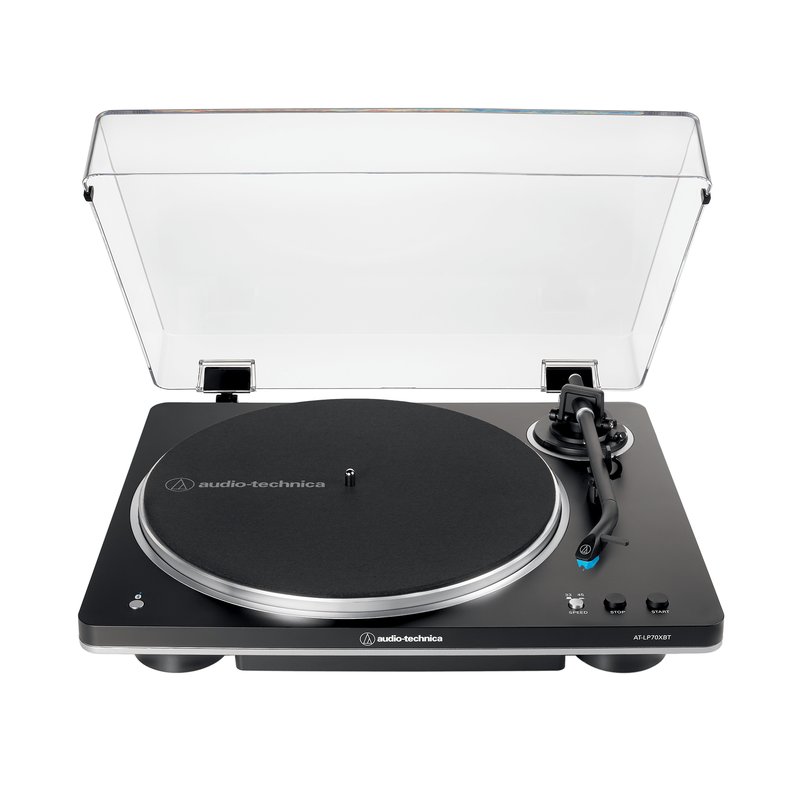

What a record player actually gives you
A record player is a different way of listening rather than a better version of streaming. You choose an album, put it on and usually listen to a side straight through. Many people find that is the point: fewer skips, more attention to the music and a collection you can see on the shelf.
Vinyl is also not a fading niche. RIAA’s 2025 year-end report counted US vinyl revenue of $1,042.9 million on a wholesale basis, up 9.3% from 2024, and Billboard reports it was the first time since 1983 that vinyl passed $1 billion in wholesale revenue. New releases and reissues keep arriving, so there is plenty to play.
Vinyl in numbers (RIAA, 2025, US)
- 46.8 million vinyl units, up 7.9% from 43.4 million in 2024.
- $1,042.9 million in vinyl revenue (wholesale), up 9.3%.
- 29.5 million CD units, down 11.6%: vinyl outsold CDs by units and revenue.
- RIAA cites 19 years of vinyl growth.
Interestingly, not every buyer plays what they buy. A 2023 Luminate survey reported by Hypebot found that 50% of US consumers who bought vinyl in the previous 12 months did not own a record player. If you are one of them, a player turns a shelf of souvenirs into music.
What it costs to get started
The turntable is only part of the bill. To hear a record through speakers you need three things, as Audio-Technica explains: the turntable, phono preamplification and something to make sound.
| Setup | What you buy | Good for |
|---|---|---|
| All-in-one | One player with speakers built in | Casual listening, gifts, small rooms |
| Turntable + powered speakers | Turntable with built-in preamp, plus a pair of powered speakers | Most first-time buyers who want better sound |
| Turntable + receiver + passive speakers | Turntable, a receiver or amp, and passive speakers | People who already own a stereo |
| Bluetooth | Turntable with Bluetooth out, plus your wireless speaker or headphones | Using gear you already have |
A built-in preamp saves you buying a separate box. Audio-Technica says all of its current turntables have one except the AT-LP140XP, and a PHONO/LINE switch lets you turn it off later if you add a receiver with a phono input or an external preamp.
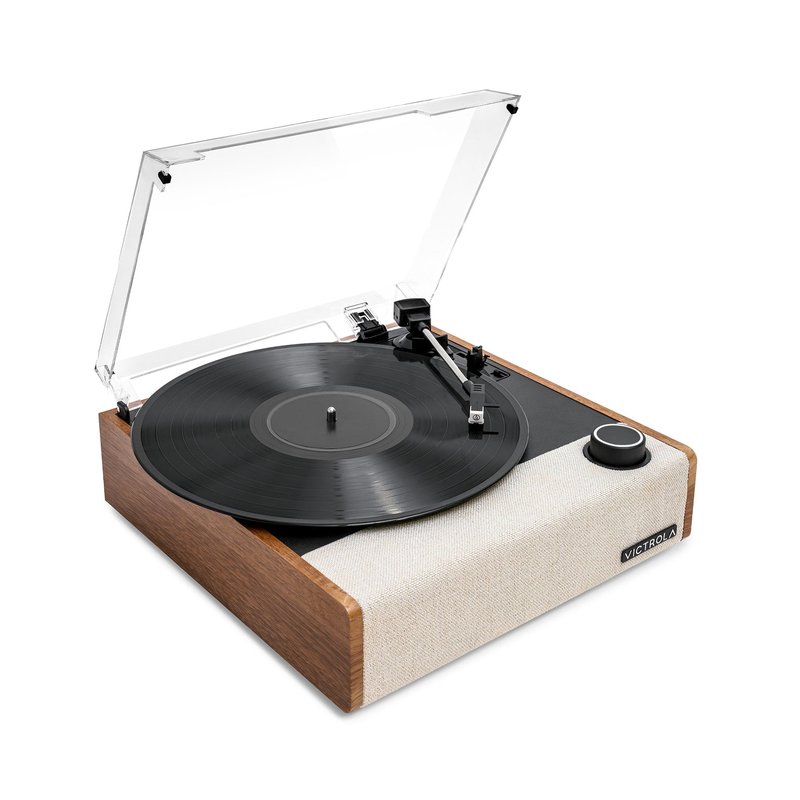
If you want one box · Mid-range price range
Victrola Eastwood II
An all-in-one with built-in speakers and an Audio-Technica AT-3600LA cartridge. Bluetooth works both ways, and RCA output means you can add powered speakers later.
See today’s price ›Running costs are modest but real. Styli wear out: manufacturers quote roughly 300 to 1,000 hours depending on the stylus, and Audio-Technica’s AT-LP60XHP manual suggests replacing it after about 400 hours. Belt-drive turntables need a new belt from time to time; Audio-Technica’s rule of thumb is about once a year.
The honest trade-offs
Vinyl asks more of you than a streaming app. These are the parts people underestimate:
- Records cost money and space. The Library of Congress notes grooved discs average more than 35 pounds per shelf-foot, so plan sturdy shelving if your collection grows.
- They need care. Records should be stored upright, kept cool and away from heat, and handled by the edges. Audio-Technica says hot, damp spaces can warp them.
- The player matters. In a 2015 review, What Hi-Fi measured just over 7 g of downforce on a Crosley Cruiser and said it would wear records faster than a typical turntable.
- Sound is not automatically better. A record is only as good as its pressing, its condition and the system playing it. We make no claim that vinyl sounds better than digital.
None of these is a reason to avoid vinyl. They are reasons to choose a player with a decent stylus, set it up properly and look after your records from day one.
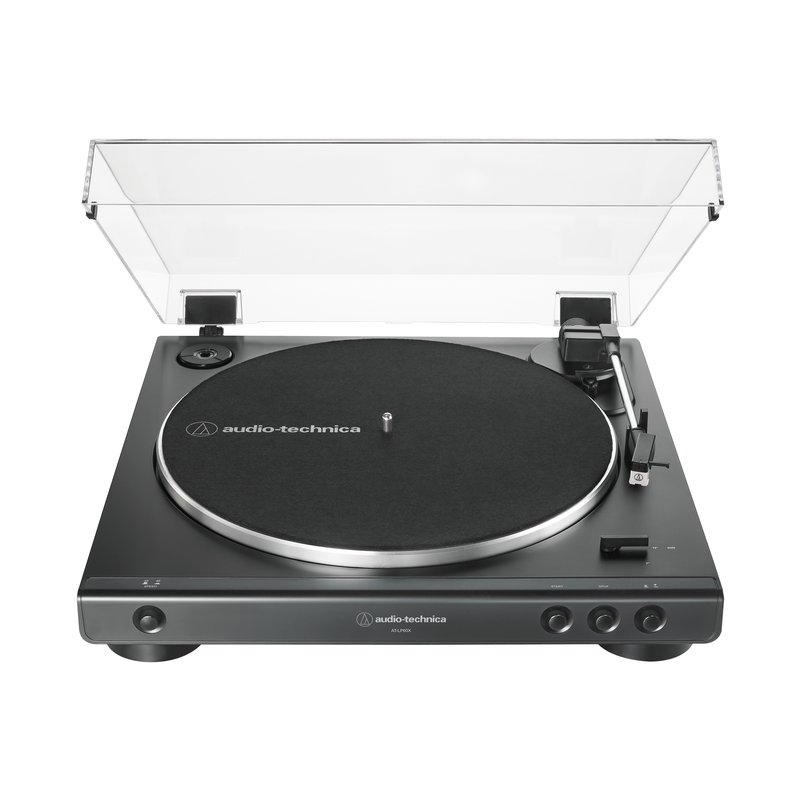
The simplest wired start · Mid-range price range
Audio-Technica AT-LP60X
Fully automatic, with a switchable built-in preamp so it plugs straight into powered speakers. Its replacement stylus is the ATN3600L.
Check connections & specs ›Who should buy a record player, and who should not
A record player is likely to be worth it if:
- You already buy albums, or want to own the music you listen to most.
- You enjoy listening to an album start to finish rather than a shuffled playlist.
- You have a spot for a turntable away from heat and heavy vibration, and room for records.
- You are happy to replace a stylus and a belt now and then.
It is probably not worth it if you mainly want background music around the house, you have no room for records, or you are not prepared to spend a little more than the cheapest suitcase player. A very cheap player can disappoint on sound and, if its tracking weight is heavy, add wear to your records.
Honest note
If you are buying vinyl because you expect it to sound better than streaming, be careful. The sources we rely on do not support a blanket claim either way, and a poor turntable or worn records can sound disappointing. Buy vinyl for the ritual, the collection and the music you cannot get any other way.
How to start without overspending
- Decide how you will listen. Built-in speakers, powered speakers, a stereo, Bluetooth or Sonos.
- Choose a turntable with a built-in, switchable preamp unless you already own a preamp or a receiver with a phono input.
- Prefer a named cartridge and a replaceable stylus. It makes maintenance and upgrades easy.
- Pick automatic if you are new. Audio-Technica says its automatic models let you press start and walk away.
- Buy a record brush. Audio-Technica’s AT6011a uses carbon-fiber bristles that reach into the grooves.
Start with a handful of records you really love, then build slowly. The setup you choose now can grow with you: add better speakers, an external preamp or an upgraded stylus later.
Questions people ask
Is vinyl still popular in the US?
Yes. RIAA counted 46.8 million vinyl units in 2025, up 7.9% from 2024, and US vinyl revenue passed $1 billion on a wholesale basis for the first time since 1983, according to Billboard. Vinyl outsold CDs by units and revenue.
Do I need speakers for a record player?
Only if it lacks built-in speakers. An all-in-one only needs plugging in, Crosley says. A component turntable needs powered speakers, an amplifier with passive speakers, Bluetooth speakers or headphones.
Does vinyl sound better than streaming?
There is no simple answer, and we do not claim it does. How a record sounds depends on the pressing, its condition, the stylus and the rest of the system. Many people choose vinyl for the experience and the collection.
How long does a record player last?
The parts that wear are the stylus and, on belt-drive models, the belt. Manufacturers quote stylus life of roughly 300 to 1,000 hours, and Audio-Technica suggests replacing the belt about once a year as a rule of thumb.
Will a cheap record player ruin my records?
It can add wear. What Hi-Fi measured just over 7 g of downforce on a 2015 Crosley Cruiser and said it would wear records faster. Crosley and Victrola do not publish tracking force for their suitcase models, so if your records matter, choose a player with a named cartridge and adjustable tracking force.
Read first: best vinyl record player · record players for beginners
Sources: RIAA: 2025 Year-End Revenue Report · Billboard: RIAA 2025 music report · Audio-Technica: phono preamp vs power amplifier · Library of Congress: Care, handling and storage of records · What Hi-Fi: Crosley Cruiser review · Hypebot: 50% of vinyl buyers do not own a record player
Specifications are each brand’s own and can change between production runs; check the product page and the manual before you buy. Follow the manufacturer’s instructions for setup, tracking force and stylus replacement.